The article was written by Vincenzo Battista in March 2002 for the occasion of the “International year of the mountains”, as announced by the ONU and the FAO. “The high lands of the Velino mountain range and the culture of its peoples, not the land of the defeated or the villages of fables”. The Comunità Montana Marsica I, alongside with the other mountain communities of the Marsica, the CAI, the local institutions and the municipalities, organized a presentation lecture of the International Year of the Mountains and the events scheduled in the Fucino area in this context.
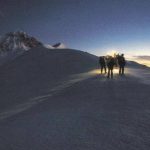
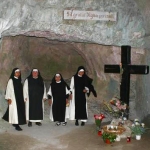
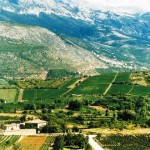
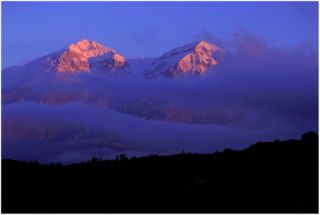
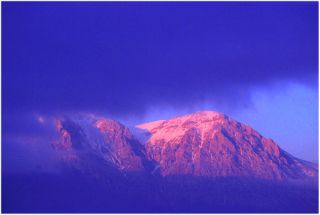
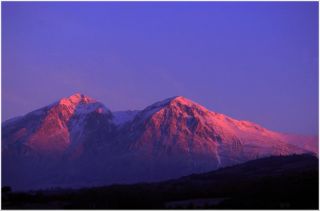
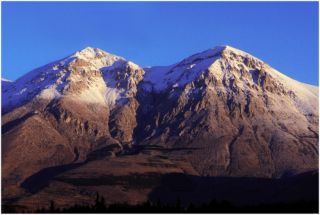
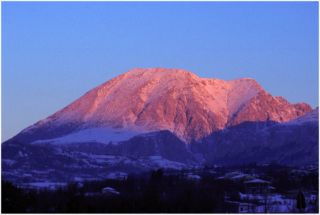
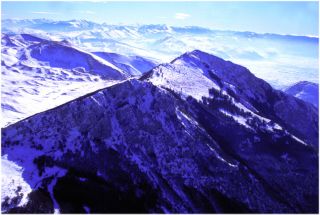
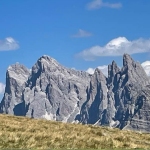
Leggi la versione italiana Le Genti del VelinoThe AIM Italian committee drew a scenario where the local communities might employ resources, plan events, offer their creativity to the appointment, to gather an insight into the sustainable development of mountain areas “aiming at the welfare of the populations”. One of the targets was also to tell the history of the great social changes that affected the area and the mountains. Velino possibly derived its etymology from the Latin “Vellum”, meaning swamp, when an ancient lake from the Roman times reflected the sunlight under the mountain’s giant profile, till the 1944 bombings which, as the people who took refuge in the caves of the last hermits still remember, obscured the sky over Massa d’Albe.
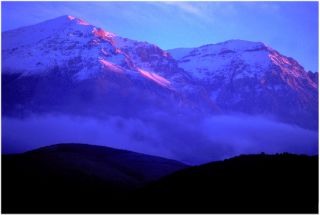
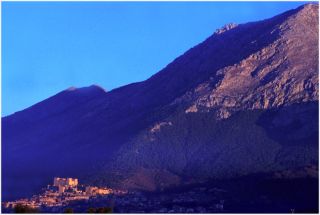
In order to tell the story of the mountain and promote its potential resources towards a cultural development, Vincenzo Battista promoted projects, such as the institution in Avezzano (AQ) of a “Museum of the Apennine” that, according to the Comunità Montana Marsica I, was to gather testimonials and documents about the mountain and its people, with the aim to preserve the rich historical and environmental heritage of the wide Velino territory, “rocky peaks and crests, dark, wild valleys and rich landscapes offering amazing contrasts to the eye”, as the first CAI explorers wrote in 1898.
The territorial quarters. Research on the field
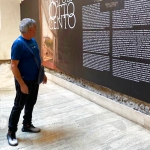
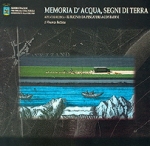
A project of the COMUNITÀ MONTANA MARSICA I, Avezzano. The digital exhibition, an instrument of communication and documentation of Cultural Resources, includes under a researcher’s point of view, for the first time in the last decades within the scenario of the Marsica landscape, the architectural and archaeological “characters”, the signs and the heritage left layer after layer by man. All this within a far-reaching program aiming at the establishment of museum sites after a promotional tour in the municipalities to be researched, in an authoritative center chosen by the Comunità Montana (a territorial body) and also on the internet, so as to satisfy the ever-growing demand for culture, coming also from the field of education and social studies.
Schedule of the Events
- Year 2002: International Year of the Mountains, announced by the UNO and FAO. Sector A. Scurcola Marsicana, Magliano de’ Marsi, Massa d’Albe, Celano, Avezzano.
- Year 2003: Luco dei Marsi, Trasacco, Villavallelonga, Collelongo
- Year 2004: Carsoli, Pereto, Oricola, Rocca di Botte, Sante Marie, Tagliacozzo, Cappadocia, Castellafiume.
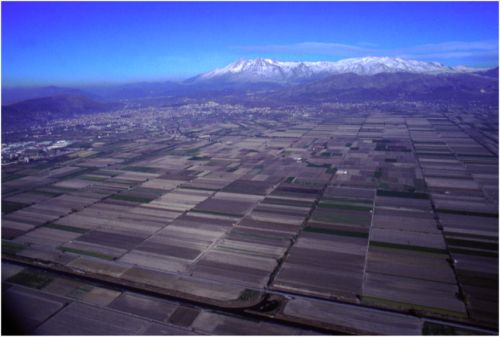
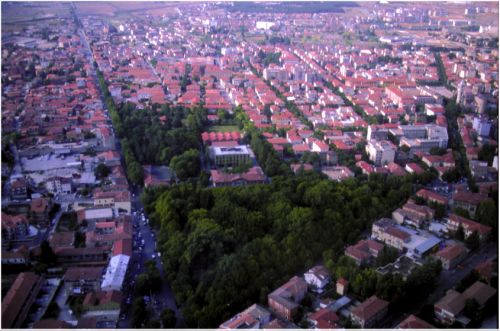
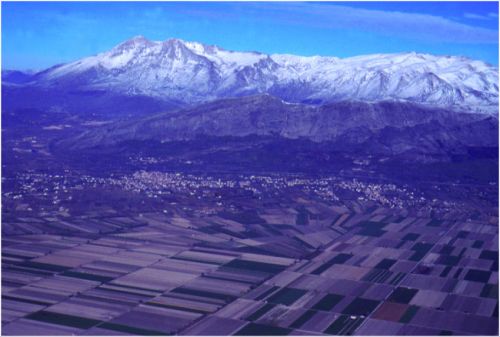
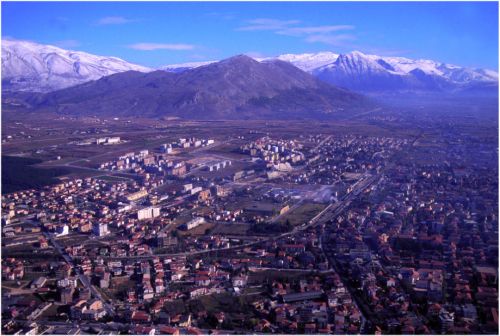
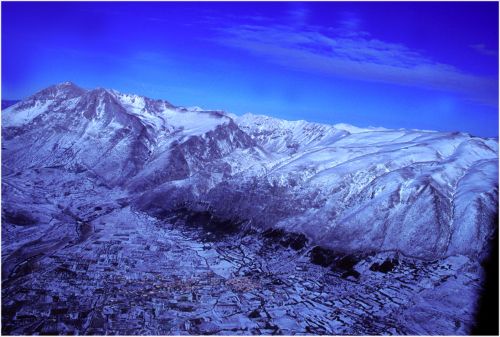
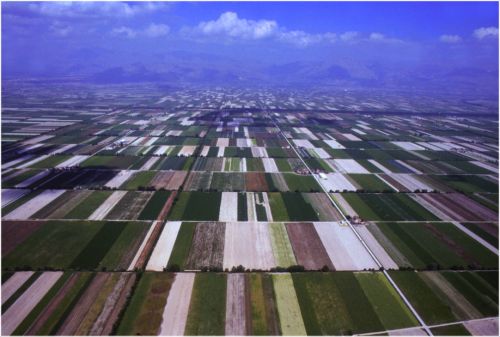
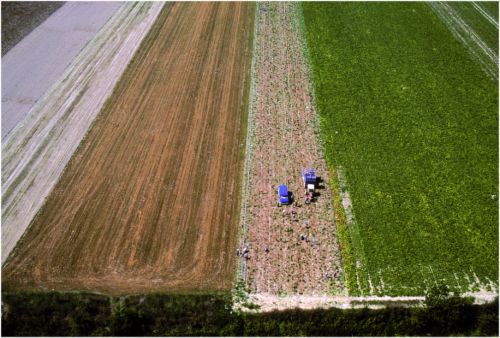
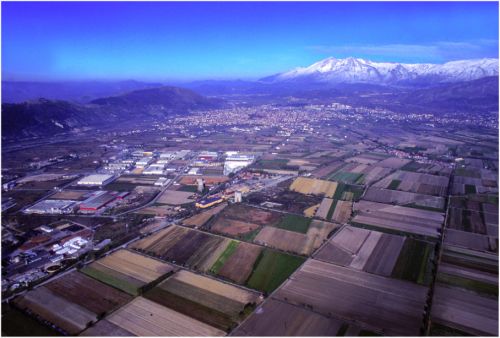
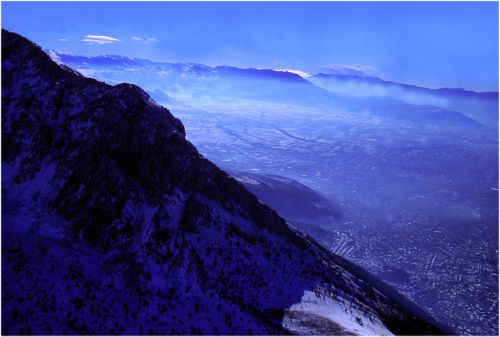
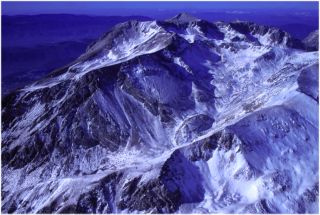
Each theme area of the project was to have an exhaustive title relating to its heritage of Cultural Resources and landscape treasures. The territory of the municipalities was to be monitored through field surveys, so as to identify the elements of greatest cultural value. Aerial images were to be employed, an absolute novelty in the field of the survey of Cultural Resources, to study the architectural and environmental features guarded by the local communities in their settlements. A main goal was to identify, within the said territorial areas, the archaeological, medieval, renaissance circuits (from monuments to objects) reaching into the 20th and 21st centuries, that could help to reconstruct, through cultural resources, the “deposits” of local history and the perspectives for development promoted by the exhibition.
In order to qualifying the landscape of the cultural resources, the “Comunità Montana Marsica 1” was to provide not only a communication and documentation tool of its own land, but also a stable museum project, able to “fix” forever the history and historical developments of the territory. Besides, the places (the municipalities) where the three digital permanent exhibitions will be on show, will be shown in signs, posters and guidebooks to attract cultural tourism in a really modern, different way.
Marsica is to be considered as a cultural product to be exported. The digital exhibition was supposed to be sent to conferences, exhibitions as well as regional, national and international shows on the environment and tourism. A museum structure conceived in this way might become a part of a regional circuit and occupy a relevant place among museums and visit centers, as a vehicle to inform about and explain the territory of Marsica.
Among the implications of the research, with the wealth of unpublished material (especially images) collected during the research on the field it would be possible to make posters, brochures and other media that the Comunità Montana may need to create a new, modern “image”, just as the other cultural and tourist organizations of the Abruzzo region.
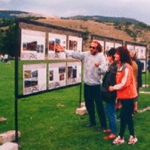
The digital exhibitions were to be an educational and information frame for the digital panels including texts, captions, aerial and ground pictures, drawings, land use plans, old prints, ancient topographical maps, old pictures. Within the presentations of the digital exhibition in the various municipalities, the “Comunità Montana Marsica 1” may schedule musical events, performances, and readings, side by side. The photographic and literary material collected for the research may be used also for multimedia presentations, possibly inside the historical centers of the Marsica municipalities that were to host the itinerant digital exhibition. Moreover, the panels of the digital exhibitions, easy to place anywhere, might be transferred, through a long-term program of lectures and meetings organized by the Comunità Montana Marsica 1, to elementary and secondary schools; as a matter of fact, education programs are more and more focusing on the problems connected to the maintenance, fruition, custody and study of the Cultural Resources of the territory.
The results of the here described project would be available to administrators, teachers and students, as well as public bodies, as knowledge tools able to favour a reflection on the Marsica identity and to help a better planning of land use; besides, they were to attract attention and visitors to this territorial reality of great importance for the Abruzzo region.
In conclusion, the history of Marsica written on the basis of Cultural Resources, by means of the digital exhibitions, is supposed to enrich the processes of cultural growth, the feeling of belonging to the territory, and a deeper understanding of the anthropic landscape.








 Articoli per il quotidiano IL CENTRO
 Il Passaggio nell'Arcolaio, Storie