Leggi la versione italiana: La Maiella si Tinge di Rosa: Campo di Giove
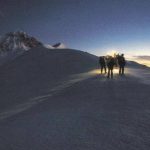
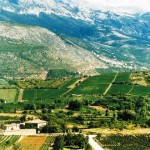
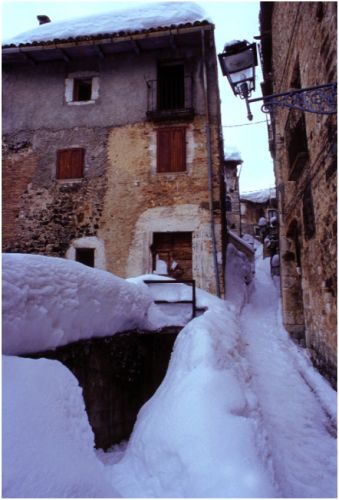
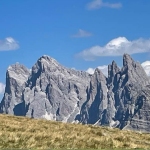
Maja’s “blouse” turns into pink, at sunset: “Sleeping Beauty”, the Maiella, geologically lying with her petrified body for about 20 km, renews her ancient legend on the western slope of the “Aquilan Abruzzo”, while we get down on our skis returning from an excursion on the lace-like edge of Monte Porrara, sculpted by ice, which has become in the collective imagination her breast and abdomen; we go down toward Campo di Giove: from the new, star-like urban plan, we can only with some difficulty recognize the ancient settlement of Campus Jovine, a compact nucleus around the hill, surely exacly as was seen by Fortunato Rosselli, born 1855, who was to become one of first guides, for generations, of the Maiella and Campo di Giove.
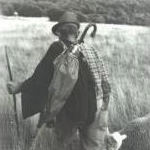
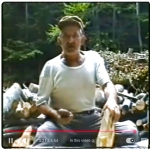
With a shepherd’s mantle, the walking-stick typical of Alpine mountain guides and the legs covered with rough cloth (gaiters), seventy-five years old in a picture dated 1930 taken by an excursionist that he had escorted through a winter ascent on Monte Amaro ( 2795 meters), with an attitude which is exactly that of the legend around him, telling of his deeds, of his encounters with bears and wolf packs in the Maiella. A man belonging to the history of 19th century – early 20th century mountaineering. More images of the Rosselli family, dated this time 1939, preserved for our days: the house, and outside the mules, before an excursion on the Maiella, that along with dozens and dozens of other ethnographic images of other families and excursions, will form the material of a “Memory Archive” of the mountain and its people which has just been brought to the surface, a primitive tourism that seems light years away from the festive tourism of the present-day winter resort.
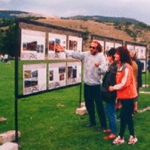
“The past has been discovered” say the administrators, and with it a “theme project on the culture of mountaineering and the mountain ” that the town council of Campo di Giove will promote through the establishment of a permanent digital exhibition made of extraordinary images that from the late 19th century to the postwar period will document the mountain landscape, the places, man’s work and more closely, the epic men of the “sacred mountain”.
“The past has been discovered” say the administrators, and with it a “theme project on the culture of mountaineering and the mountain ” that the town council of Campo di Giove will promote through the establishment of a permanent digital exhibition made of extraordinary images that from the late 19th century to the postwar period will document the mountain landscape, the places, man’s work and more closely, the epic men of the “sacred mountain”.








 Articoli per il quotidiano IL CENTRO
 Il Passaggio nell'Arcolaio, Storie