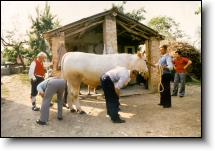
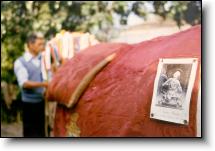
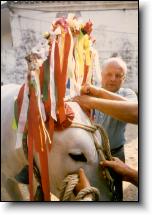
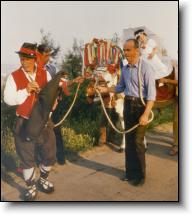
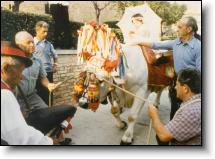
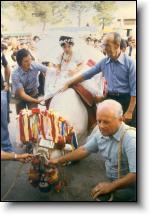
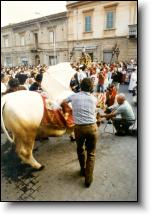
The long, careful, detailed "dressing" is performed by the feast committee and the owner who looks after the animal, an essential symbol of the whole religious community. Wreaths, horn covers in scarlet silk, silver bells, precious cloths, mirrors and other symbols like the picture od St. Zopitus, cover and embellish the ox, who will become, for one day a year, not the animal of the everyday work but the "vehicle": a supernatural element of devotion and respect, and here is why.
La "vestizione" è lunga, accurata, meticolosa da parte del comitato e del proprietario del bue che custodisce l'animale divenuto simbolo insostituibile dell'intera comunità religiosa. Ghirlande, copricorni di raso scarlatto, il corno rosso, campane d'argento, stoffe pregiate, specchi ed altri simboli come l'effigie di San Zopito rivestono e arricchiscono il bue che per un giorno, in un anno, viene spostato da una ordinarietà quotidiana per divenire il "tramite": elemento soprannaturale, di devozione, di rispetto e capiremo il perché.