HomeLegacyIn Cammino ⇒ Secinaro, April 2002

Secinaro: Ten Mountain Tales - Dieci Racconti per la Montagna

Vincenzo Battista Secinaro coat of arms logo
For this issue of "In Cammino" prof. Battista takes us into the heart of the newly established Sirente-Velino Regional Park to show the stages of a research in progress in Secinaro for the U.N.O. International Mountain Year. The research will focus on ten true-life stories of the mountain so as to represent the cultural and environmental heritage of the place, and on the collection of old images kept by the local families. The results will be presented on 10, 11 and 12 August, and the stories told by people of the place.
In questo numero della rivista foto-etnografica "In Cammino" prof. Battista ci conduce nel cuore del aprco regionale Sirente-Velino, di recente istituzione, per illustrarci le fasi di una ricerca in fieri che si sta svolgendo a Secinaro sotto l'egida dell'Anno Internazionale della Montagna. La ricerca produrrà dieci storie di vita della montagna, così da rappresentare l'eredità culturale ed ambientale del luogo, mirando anche a raccogliere foto antiche conservate dagli abitanti del paese. i risultati saranno presentati nei giorni 10, 11 e 12 agosto, e le dieci storie saranno declamate da voci autentiche del luogo.

Introduction

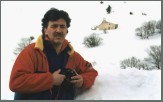
He's waiting for me in Piazza degli Eroi, perhaps the last one and unaware of it, Luigino Barbati, with his two brothers and a tourist enterprise he set up some years ago, obstinate to stay on the "frontier, - he says - among the medicinal herbs and plants "which he uses to season the dishes to the groups of tourists stopping in Secinaro, in the heart of the Sirente mountains, a borderline post amid last forest that has survived to our days, a forest that was in the tales of medieval merchants on the "Road of the Abruzzi"; and the sun that here the merchants finally saw, after two weeks of travelling the Apennines under the thick vegetation; and the slopes of the Subequana valley coming down to the Aterno river, where farmers, to mark field borders, used stones from Roman times, elegantly carved by the from the Peligni Superequani, and found while tilling the fields in agricultural works.

Thousands and thousands of wood hectares rise like theater curtains behind Secinaro, until they reach the dolomite-like pinnacles of the Sirente range: a landscape that "fades into infinity", as Felice Santarelli wrote in 1922 and that today "without a coordination of the small municipalities to improve the services, to develop projects for a "return" tourism, is doomed to a slow, implacable desertification" says Giuseppe Colantoni, the mayor of Secinaro. In a few weeks on the Website pf the comune the program of events for the Secinarese abroad and their associations will be launched, in order to gather them, next August, according to a project planned by the town administration.

Three days planned within the "International Year of the Mountains - 2002" with a conference on "testimonials and landscape", a documentary bilingual exhibition under the title "Secinaro, ten tales for the Year of the Mountains ", narrative performances in the historical town centre, trekking in the ancestral sites of the Sirente and finally the meetings with entrepreneurs belonging to the third generation of emigrants, a possible magic wand to understand whether it will ever be possible to break the spell in the lines of poet Santarelli.

Vincenzo Battista, May 2002

Some of the articles in the E-zine "In Cammino" were published in the daily paper "Il Messaggero", edition of L'Aquila

Introduzione

Mi aspetta a Piazza degli Eroi, e lui, forse l'ultimo e inconsapevole, Luigino Barbati, con i due fratelli e un'impresa turistica avviata da pochi anni ostinata a restare alla "frontiera - dice - tra le erbe medicamentose e le piante officinali" con cui condisce le pietanze ai gruppi di turisti a Secinaro, dentro la montagna del Sirente, spartiacque tra l'ultima foresta giunta fino a noi e narrata dai mercanti medioevali sulla "Via degli Abruzzi", ed il sole che nei quindici giorni a piedi di attraversamento non si vedeva coperto com'era dalla fitta vegetazione, e i declivi della Valle Subequana che scendono fino al fiume Aterno dove i contadini per segnare i confini dei campi utilizzavano le steli di epoca romane finemente scolpite dai Peligni Superequani, dissepolte dai lavori agricoli.

Migliaia e migliaia di ettari di bosco si alzano come quinte alle spalle di Secinaro fino ai dolomitici pinnacoli del massiccio del Sirente e un paesaggio che "a l'infinito la vision si perde", scriveva Felice Santarelli nel 1922 e che oggi "senza un coordinamento dei piccoli comuni per migliorare i servizi, le idee per un turismo di ritorno, è destinato ad una lenta e implacabile desertificazione", afferma Giuseppe Colantoni, sindaco di Secinaro. Tra poche settimane nel sito del Comune di Secinaro verrà lanciato il programma di manifestazioni per i secinaresi emigrati all'estero e le loro associazioni, per riunirli, nel mese di agosto, partendo da un'idea - progetto che il Comune ha promosso.

Tre giornate articolate nell'ambito dell'Anno Internazionale della Montagna 2002 con la presentazione di un convegno su "testimonianze e paesaggio", una mostra documentaria in bilingue dal titolo "Secinaro, dieci racconti per l'Anno delle Montagne", "performance narrativi" nel centro storico, trekking nei luoghi della memoria del Sirente e infine gli incontri con gli imprenditori della terza generazione degli emigranti, un possibile varco per capire se le "radici" potranno mai rompere l'incantesimo dei versi del poeta Santarelli.

Vincenzo Battista, maggio 2002

Alcuni articoli presenti nella rivista "In Cammino" sono pubblicati anche nel quotidiano Il Messaggero", redazione dell'Aquila

Go to the first page -- Vai alla prima pagina


Top