HomeLegacyIn CamminoFestivals and Traditions in Abruzzo ⇒ The Sirente Ice Workers, part 3

The Ice Workers - I Cavatori di Ghiaccio - part 3

Continues from previous page -- Continua dalla pagina precedente
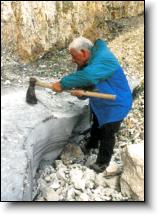
We are back to the Sirente neviera. This time in the company of Luigino Barbati and an elderly ice worker, born in Secinaro. From the glacier's front cutting begins with an axe. The ice blocks must be all the same size, of about 50-60 kg each. The mule can carry up to 200 kg ice, but only if well balanced, on both sides of the animal's pack-saddles. We have to be fast, we cannot stay below the rocky wall for too long because of the debris falling down. The ice block must be well worked and smoothed, all blocks in the same form and size, to be delivered to hospitals, markets, rich mansions... Temperature is dropping, it is freezing cold. The ice extraction is performed also with a number of different iron tools.
Neviera Neviera
Torniamo ancora sulla neviera del Sirente. Questa volta con Luigino Barbati e un anziano tagliatore del ghiaccio, nato a Secinaro. Dal fronte del ghiacciaio inizia il taglio, con un'ascia. I blocchi devono essere tutti uguali, di 50, 60 chili ciascuno. ll mulo può caricare, fino a circa due quintali di ghiaccio, ma bilanciato per bene, ai lati sul "basto" dell'animale. Bisogna fare in fretta, non possiamo restare molto tempo sotto la parete perché scende pietrame. Il blocco di ghiaccio doveva essere lavorato, rifinito per bene, stessa "pezzatura" per portarlo negli ospedali, nei mercati, alla casa dei ricchi signori... La temperatura è scesa, fa molto freddo. Il lavoro di estrazione del blocco viene aiutato anche con diversi utensili in ferro.
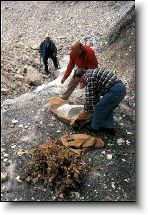
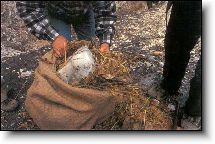
The ice blocks are covered with "pula" (pula is the powder left from threshing) and then a layer of dry beech leaves and finally enclosed in a sack. This was a kind of heat isolation allowing to maintain about 50% of the product during the long journey to the delivery sites. The ice was measured in "salme", corresponding to about 100 kg. The ice workers tell how they hit with their axes on the ice, to drive away the "ciaule" (crows) who flew down and stopped on the rock wall called "peschio", since they might cause real landslides. They would leave Secinaro in the night, so that at dawn they were at the neviera, began to work the ice and then left directly for Apulia, Latium, the towns of the Abruzzese coast, traveling with their mules all day and the following night to finally deliver their shipment.
NevieraNeviera
I blocchi di ghiaccio venivano rivestiti con la polvere di pula (la polvere della trebbiatura) e uno strato di foglie secche di faggio e poi avvolti da un sacco. Questa era una sorta di coibentazione termica che permetteva la conservazione del 50% del prodotto durante il lungo tragitto fino alla consegna del prodotto. Il ghiaccio si misurava in "salme", che corrispondeva circa ad un quintale di peso. I cavatori del ghiaccio raccontano che battevano le asce sulla pietra per far volare "le ciaule", le cornacchie, che si posano sulla parete chimata "il peschio", perché potevano causare vere e proprie frane. Si partiva di notte da Secinaro per trovarsi all'alba nella neviera, lavorare il ghiaccio e poi partire con i muli anche per le Puglie, il Lazio, nelle città della costa Abruzzese, viaggiare tutto il giorno e di nuovo, la notte, consegnare la merce.
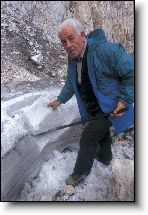
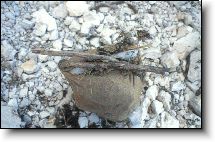
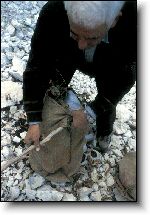
The sack containing an ice block was closed with the "tortelli": a method of tying not with ropes but small wooden sticks to press the "mouth" of the cloth container. Looking at the neviera, here at an altitude of 2000 meters, we can read in the different colors of the ice layers the different epochs one over the other. The never-ending requests for ice supply coming from the cities compelled the Secinaro Administration to establish a municipal system of bidding contracts. The monopoly of the supply to cities was granted to entrepreneurs, however local people were allowed to cut and extract ice on their own. When modern refrigeration systems came into common use this activity typical of Sirente ancestral culture went into oblivion.
Neviera Neviera
Il sacco, con dentro i blocchi di ghiaccio, si chiudeva con i "tortelli": un sistema di legatura che non utilizza le corde ma bensì piccoli bastoni in legno per comprimere la "bocca" dell'involto di tela. Guardando la neviera, qui a 2000 metri, possiamo leggere gli strati del ghiaccio che hanno colori diversi, epoche diverse che si sono sovrapposte. Le incessanti richieste di approvvigionamento del ghiaccio nei centri urbani, portarono l'Amministrazione di Secinaro alla realizzazione di un regime municipale di appalto. Il monopolio del rifornimento urbano era concesso agli imprenditori. I locali, tuttavia, i cavatori di Secinaro, potevano tagliare ed estrarre il ghiaccio. Con l'introduzione dei moderni sistemi di refrigerazione si assiste, poi, al declino di questa attività di cultura materiale del Sirente.
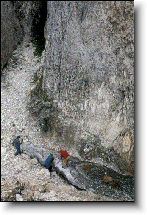
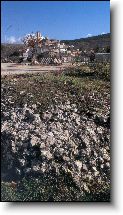
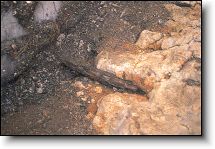
The neviera ice is here retreating, leaving old tools and instruments used in the past to dig ditches, draw signs for the cutting - the so called "salme" of ice, to measure the "banchi" (=sections) to cut for transport to the valley. While we examine the neviera site, we see these tools, silent witnesses of a timeless culture that gave these people a source of revenue, of basic survival. During the long journey to the neviera, or the ice extraction, these tools would sometimes fall and be lost along the gravelly path. Then inside the forest men would work on the charcoal production, felling trees, taking care of mules.
Neviera Neviera
Il ghiaccio della neviera si ritira: emergono vecchi utensili e manufatti utilizzati nelle epoche passate per scavare le trincee, delimitare i tagli, le cosiddette "salme" di ghiaccio, misurare i "banchi" da tagliare e trasportare a valle. Mentre ispezioniamo il sito della neviera, guardiamo questi oggetti che ci trasmettono una testimonianza che sembra non avere tempo ma che tuttavia ha concorso a creare una fonte di reddito, un'economia di sussistenza. Nel lungo viaggio verso la neviera, con l'estrazione del ghiaccio portato dai muli, a volte questi cadevano lungo il brecciaio. Poi dentro il bosco si incontravano gli uomini addetti alla lavorazione delle carbonaie, i tagliatori, i mulattieri.
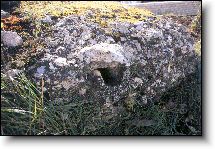
Here at last, after climbing down the Sirente mountain, we visit a very special building: an ice deposit. Stones are the basic building material of the underground construction in the vicinity of Goriano Sicoli, on a site called "neviera", bordering the ancient Celano - Foggia "tratturo" which passed through the village of Goriano. This special building is an underground, barrel-vaulted cavity, lined with mortar and stone with small holes for airing. The ice downloaded off the mules was sent often along this very tratturo, to the markets of Central and Southern Italy.

Vincenzo Battista, December 2001

NevieraNeviera
Infine, dopo aver ridisceso la montagna del Sirente, visitiamo un edificio particolare: una costruzione adibita a deposito del ghiaccio. La pietra è l'elemento principale dell'edificio ipogeo costruito nei pressi dell'abitato di Goriano Sicoli, nella contrada chiamata "neviera", ai bordi dell'antico tratturo Celano - Foggia che entrava, con il suo tracciato, dentro l'abitato di Goriano. Con la volta a botte, l'edificio, nel sottosuolo è rivestito in malta e pietre con piccoli fori di aereazione. Il ghiaccio depositato con le carovane di muli veniva inviato, spesso attraverso lo stesso tratturo, nei mercati dell'Italia centro - meridionale.

Vincenzo Battista, dicembre 2001

Top